
Signal Based Marketing in B2B: Why Intent Data Is Replacing MQLs in Modern Demand Generation
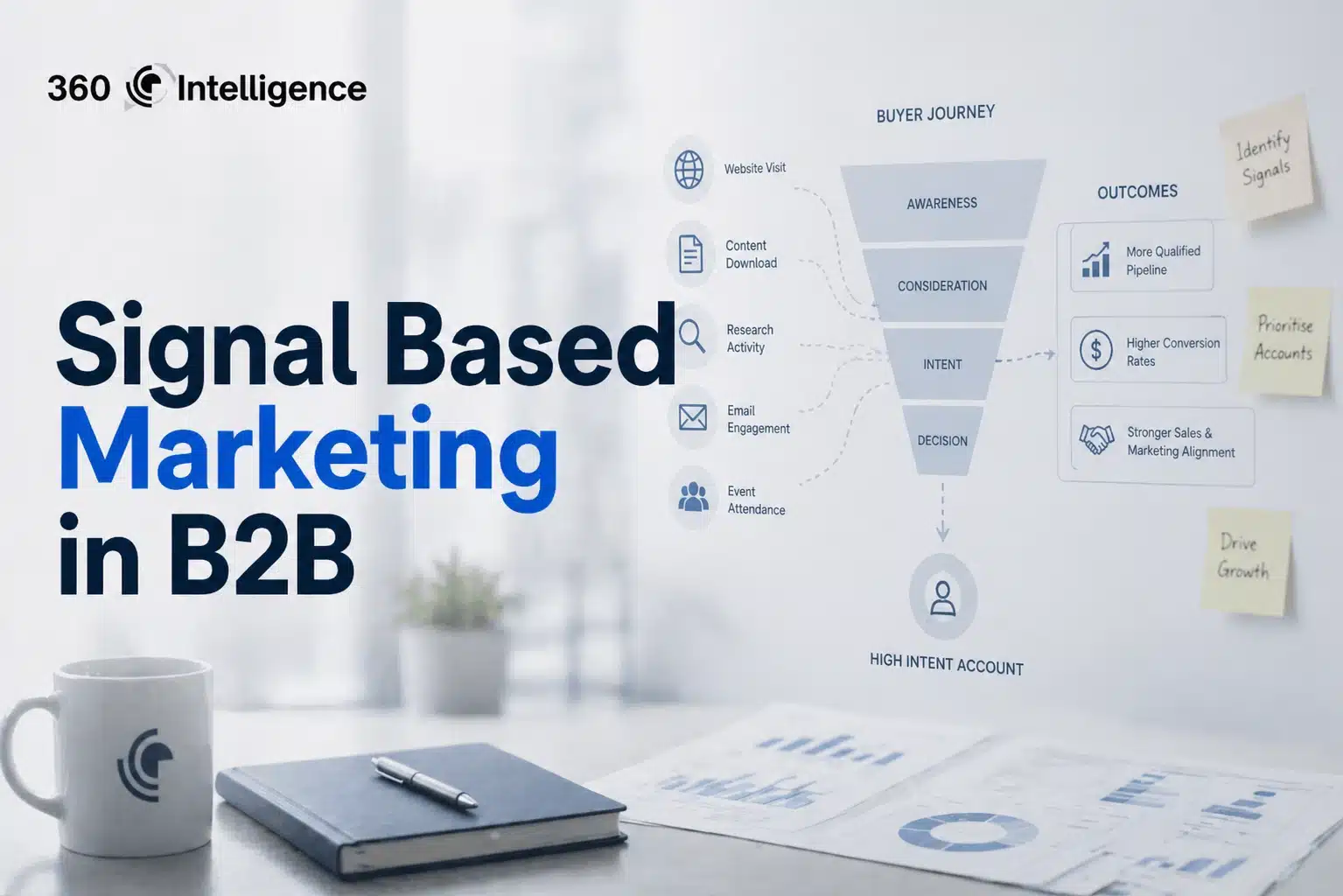
B2B marketing teams are under pressure to deliver pipeline that converts, not just leads that inflate dashboards. As buying cycles grow longer and decisions involve multiple stakeholders, traditional MQL frameworks are breaking down. Signal based marketing B2B is emerging as a more precise, revenue-aligned approach, using real buyer intent data to prioritize accounts, guide outreach, and improve conversion across the funnel. This shift is not just tactical. It is redefining how demand generation is measured, executed, and trusted.
The Shift from Volume to Validity in Demand Generation
For years, marketing performance has been anchored to MQL volume. The logic was simple. Generate more leads, pass them to sales, and expect pipeline growth to follow. In practice, this model has created friction. Sales teams often question lead quality, while marketing teams struggle to prove revenue impact.
Recent data shows that a significant portion of MQLs never convert into opportunities. The issue is not just lead quality. It is timing and context. A contact may match the ideal customer profile, but without active buying intent, outreach lands too early and gets ignored.
Signal based marketing B2B addresses this gap by focusing on observed buyer behavior rather than static qualification criteria. Instead of asking whether a lead fits a persona, it asks whether a buying group is actively researching a problem.
This distinction matters. In complex B2B environments, decisions are rarely made by individuals. They are made by committees that include procurement, finance, and operations stakeholders. Chief Procurement Officers (CPOs) are increasingly involved earlier in the process, shaping requirements and evaluating risk before vendors are even shortlisted.
Traditional lead scoring models struggle to capture this dynamic. They rely on isolated actions such as form fills or email clicks. Intent signals demand generation, on the other hand, aggregates multiple behavioral indicators across channels, including content consumption, third party research activity, and engagement patterns across accounts.
The result is a more accurate picture of who is in market and what they care about.
What Buyer Intent Data Actually Tells You and Where It Falls Short
B2B buyer intent data is often positioned as a silver bullet. In reality, its value depends heavily on how it is sourced, interpreted, and operationalized.
At its core, buyer intent data captures signals that indicate potential purchasing interest. These signals can come from first party sources such as website visits and product interactions, or third party providers that track content consumption across broader networks.
The strength of this approach lies in its ability to surface accounts that are actively researching relevant topics. For example, a surge in engagement around supply chain risk or procurement automation may indicate that an organization is entering an evaluation phase.
However, not all intent data is equal. One of the biggest challenges is signal accuracy. Third party data can sometimes reflect generalized research rather than specific buying intent. A spike in activity may be driven by a single individual, not a coordinated buying group.
Another limitation is timing. Intent signals indicate interest, but they do not always reveal purchase readiness. An account may be in early stage exploration, months away from vendor engagement.
This creates a practical challenge for demand generation teams. Acting too early can waste resources, while acting too late means missing the opportunity.
To address this, leading teams are layering intent data with additional context. This includes firmographic data, CRM history, and direct engagement signals. The goal is to move from raw signals to actionable insight.
There is also a growing recognition that intent data should inform prioritization, not replace human judgment. Sales and marketing alignment remains critical. Data can guide where to focus, but messaging and outreach still need to be tailored to the specific concerns of each stakeholder.
Replacing MQLs with Intent Driven Qualification Models
The idea to replace MQL with intent data is gaining traction, but it is often misunderstood. This is not about eliminating lead qualification entirely. It is about redefining what qualification means.
In an intent driven model, qualification shifts from individual leads to account level readiness. Instead of scoring contacts based on demographic and behavioral criteria, teams evaluate whether an account shows meaningful buying signals across multiple stakeholders.
This approach has several implications.
First, it changes how success is measured. Rather than tracking MQL volume, teams focus on metrics such as engaged accounts, buying group coverage, and opportunity creation rates. This creates a clearer link between marketing activity and revenue outcomes.
Second, it reshapes campaign design. Instead of broad lead generation campaigns, marketing teams build targeted programs aimed at accounts showing intent. Content is tailored to specific stages of the buying journey, from problem identification to vendor evaluation.
Third, it improves sales alignment. When marketing passes accounts with demonstrated intent, sales teams are more likely to engage quickly and effectively. This reduces friction and increases trust between teams.
However, making this transition is not straightforward. It requires changes in technology, process, and mindset.
From a technology perspective, organizations need tools that can aggregate and analyze intent signals across sources. This often involves integrating multiple platforms, including CRM systems, marketing automation, and intent data providers.
From a process standpoint, teams need clear definitions of what constitutes meaningful intent. This includes setting thresholds for engagement, defining stages of the buying journey, and establishing handoff criteria between marketing and sales.
From a mindset perspective, there needs to be a shift away from volume based thinking. This can be challenging, especially in organizations where MQL targets are deeply embedded in performance metrics.
Practical Trade Offs: When Signal Based Marketing Works and When It Does Not
While signal based marketing B2B offers clear advantages, it is not universally applicable. Understanding where it works and where it does not is critical for making informed investment decisions.
One key consideration is deal size and complexity. Intent driven approaches tend to deliver the most value in high consideration purchases with long sales cycles. In these environments, identifying in market accounts early can significantly improve win rates.
In contrast, for lower value or transactional sales, the cost and complexity of implementing intent data may outweigh the benefits. Traditional lead generation models may still be effective in these scenarios.
Another factor is data quality and coverage. Organizations operating in niche markets may find that third party intent data lacks sufficient depth. In these cases, first party data becomes more important, but it may take time to build meaningful signal volume.
Budget is also a critical consideration. High quality intent data platforms and the associated technology stack can represent a significant investment. Teams need to evaluate whether the expected improvement in conversion rates justifies the cost.
There is also a question of ownership. Some organizations rely on external agencies to manage intent data and campaign execution, while others build in house capabilities. Each approach has trade offs.
Agencies can provide expertise and speed, but may lack deep integration with internal systems and sales processes. In house teams have greater control and alignment, but require investment in skills and resources.
Finally, attribution remains a challenge. While intent data can improve targeting and prioritization, it does not always provide clear visibility into which signals directly influenced a deal. This can make it difficult to prove ROI, especially in complex buying environments.
Building a Signal Driven Demand Engine That Sales Trusts
For organizations looking to operationalize intent signals demand generation, the focus should be on building a repeatable system rather than isolated campaigns.
This starts with defining the buying group. Understanding which roles are involved in the decision making process, including procurement and finance stakeholders, is essential. Each role has different priorities and concerns, which should be reflected in messaging and content.
Next, teams need to map intent signals to stages of the buying journey. Early stage signals may indicate problem awareness, while later stage signals suggest active vendor evaluation. Aligning content and outreach to these stages improves relevance and engagement.
Data integration is another critical component. Combining intent data with CRM and marketing automation systems enables more accurate targeting and measurement. It also ensures that sales teams have access to the same insights as marketing.
Collaboration between marketing and sales development teams is equally important. Speed to lead remains a key factor in conversion. When an account shows strong intent, timely and personalized outreach can make a significant difference.
Finally, governance and continuous optimization are essential. Intent models should be regularly reviewed and refined based on performance data. This includes adjusting signal thresholds, updating targeting criteria, and testing new approaches.
The Real Opportunity: Moving Beyond Signals to Decision Intelligence
The conversation around signal based marketing B2B often focuses on data collection and analysis. However, the real opportunity lies in how that data is used to influence decisions.
Intent signals provide a snapshot of buyer behavior, but they do not capture the full complexity of decision making. Factors such as internal alignment, budget constraints, and risk considerations play a significant role in whether a deal progresses.
Recent trade reports suggest that successful organizations are combining intent data with deeper account intelligence. This includes insights into organizational structure, strategic priorities, and past purchasing behavior.
The goal is to move from reactive targeting to proactive engagement. Instead of simply responding to signals, teams anticipate needs and position themselves as trusted partners early in the process.
This shift requires a more nuanced approach to marketing. It is not just about identifying who is in market, but understanding why they are in market and what will influence their decision.
A More Demanding Standard for Modern Demand Generation
The move to replace MQL with intent data reflects a broader change in how marketing is evaluated. Volume is no longer enough. Credibility, relevance, and revenue impact are becoming the defining metrics.
Signal based marketing B2B offers a pathway to meet these expectations, but it also raises the bar. It requires better data, stronger alignment, and more disciplined execution.
The organizations that succeed will be those that treat intent data as a strategic asset, not just a tactical tool. They will invest in building systems that connect signals to action, and action to outcomes.
The Hidden Risk Most Teams Overlook
There is a tendency to view intent data as inherently objective, but this can be misleading. Signals are shaped by the data sources and algorithms that generate them. Over reliance on these signals can create blind spots, particularly if they reinforce existing assumptions about target accounts.
A more resilient approach is to combine intent data with direct customer insight. Conversations with buyers, feedback from sales teams, and qualitative research all provide context that data alone cannot capture.
In the end, the goal is not to replace human judgment with data, but to enhance it. The teams that recognize this balance will be better positioned to navigate the complexities of modern B2B demand generation.