The B2B Lead Generation Funnel Is Not Broken. It’s Misunderstood.
Most B2B teams don’t have a lead generation problem. They have a conversion problem they cannot fully explain. Campaigns are running. Content is being produced. Leads are entering the system. Dashboards show movement across stages.
And yet, when those leads are expected to turn into opportunities, something slows down. Pipeline looks active, but not dependable. Sales engagement is inconsistent. Conversion rates feel unpredictable.
This is often described as a funnel issue. In reality, it is a mismatch between how the b2b lead generation funnel is designed and how buying decisions actually happen.
The Traditional View of the B2B Lead Generation Funnel
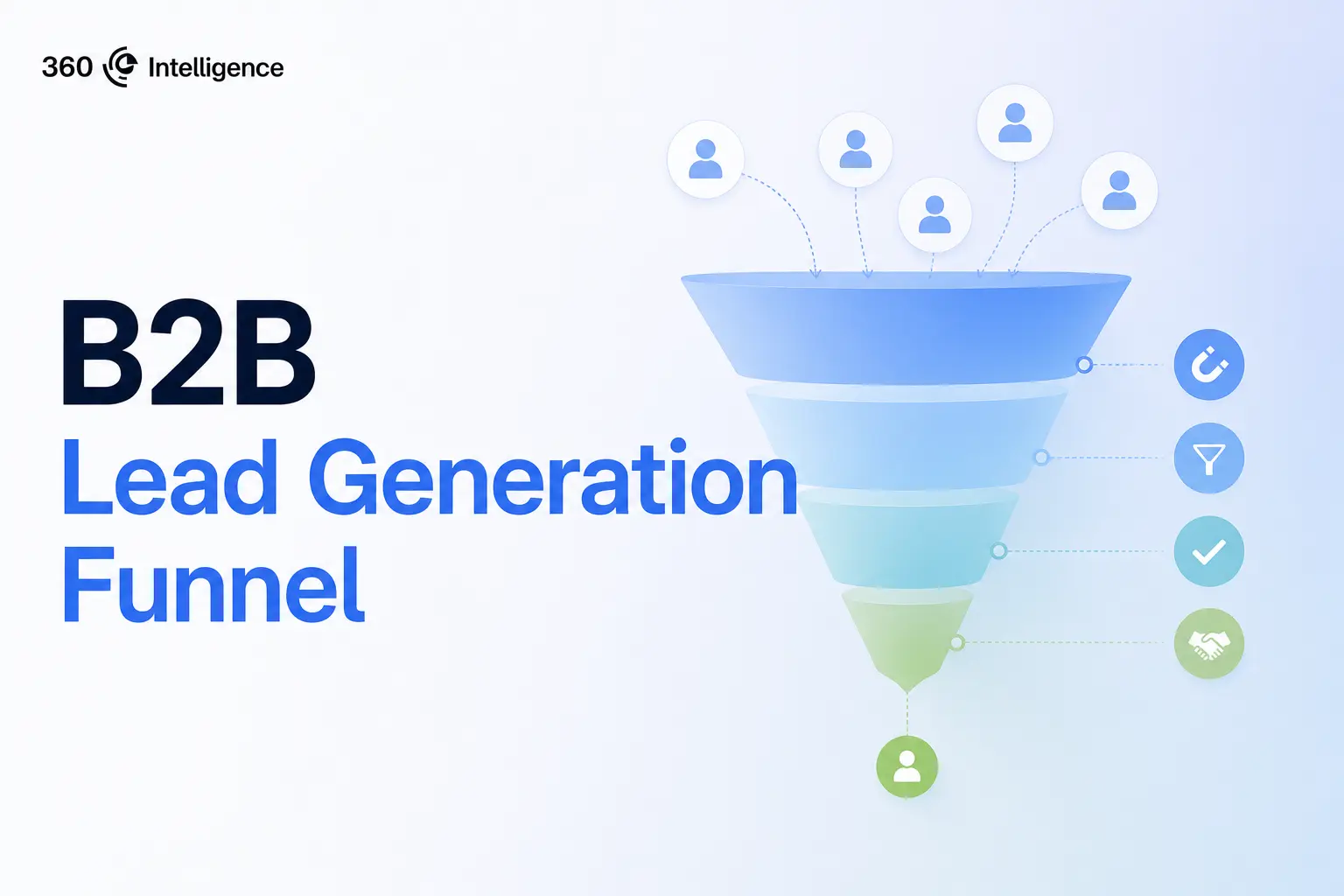
Most organisations still operate with a version of the classic funnel:
- Awareness
- Interest
- Consideration
- Decision
This structure underpins the b2b lead generation process. It informs campaign planning, lead scoring, and reporting. On the surface, it provides clarity. It creates a sense of order in what is otherwise a complex journey. But this clarity can be misleading.
Because the funnel assumes:
- Linear progression
- Predictable movement between stages
- A single decision-maker mindset
None of these assumptions fully reflect how B2B buying works today.
Why the Funnel Feels Like It’s Breaking Down
The challenge is not that the funnel is wrong. It is that it is incomplete. Most b2b marketing funnel conversion challenges stem from the gap between the model and reality.
- Buyers Do Not Move in Straight Lines
In complex B2B environments, buyers:
- Revisit earlier stages
- Pause decisions
- Restart evaluation when new stakeholders get involved
This means that progression is rarely sequential. A lead that appears to be moving forward may return to research. A deal that seems close may stall due to internal concerns. The funnel does not fully capture this movement.
- Engagement Does Not Equal Intent
A key assumption in many lead generation process for b2b models is that engagement signals intent.
But engagement can represent different things:
- Curiosity
- Education
- Benchmarking
- Active evaluation
Without context, it is difficult to distinguish between these.
This is why high engagement does not always translate into pipeline progression.
- Multiple Stakeholders Change the Dynamic
Most funnels are designed as if a single buyer is moving through stages.
In reality, decisions often involve:
- Operations leaders
- Finance stakeholders
Each group evaluates different aspects of a solution. This creates a situation where:
- One stakeholder may be ready to move forward
- Another may still be in early research
The funnel, as a model, does not easily account for this complexity.
The Hidden Friction Inside the B2B Lead Generation Process
Beyond the structural limitations of the funnel, there are operational factors that contribute to conversion challenges. These are often less visible, but equally important.
- Lead Qualification Without Context
Many organisations rely on scoring models to determine when a lead is ready for sales engagement. These models typically prioritise:
- Frequency of interaction
- Type of content consumed
- Recency of engagement
While useful, these signals do not always reflect:
- Internal alignment within the buying group
- Urgency of the problem
- Budget or timing considerations
This can lead to leads being passed too early or too late.
- Disconnected Handoffs Between Teams
The transition from marketing to sales is a critical point in the b2b lead generation process.
When this handoff lacks context, it creates friction:
- Sales may approach leads without understanding their journey
- Messaging may not reflect previous interactions
- Buyers may experience repetition rather than progression
Over time, this reduces trust and engagement.
- Content That Attracts but Does Not Progress
Content plays a central role in the funnel. But not all content supports movement.
Some content:
- Generates awareness
- Drives traffic
- Encourages downloads
But does not necessarily help buyers:
- Evaluate options
- Build internal cases
- Address concerns
This creates a gap between engagement and decision-making.
Rethinking the B2B Lead Generation Funnel as a System
If the traditional funnel is incomplete, what should replace it? Rather than abandoning the concept entirely, it may be more useful to reframe the funnel as a system of progression, not just stages of capture.
This system includes:
- Signals Instead of Stages
Instead of focusing solely on where a lead sits in the funnel, consider:
- What behaviours indicate movement toward a decision
- How engagement patterns evolve over time
This provides a more dynamic view of intent.
- Accounts Instead of Individuals
In many B2B environments, decisions are made at the account level. This means looking at:
- Collective engagement across stakeholders
- Alignment between different roles
- Depth of interaction over time
This approach reflects the reality of group decision-making.
- Progression Instead of Volume
Traditional funnels often emphasise volume at the top. A system-oriented approach places more emphasis on:
- Movement between stages
- Quality of interaction
- Consistency of opportunity creation
This does not eliminate the need for volume. It changes how success is evaluated.
Where Most Conversion Challenges Actually Come From
When organisations experience b2b marketing funnel conversion challenges, the instinct is often to optimise specific stages.
For example:
- Improve landing page conversion rates
- Increase email engagement
- Refine targeting
These actions can help, but they do not always address the root cause. In many cases, conversion challenges are driven by:
Misaligned Expectations – Marketing and sales may define “qualified” differently.
Incomplete Buyer Understanding – Strategies may not fully reflect how decisions are made internally.
Fragmented Messaging – Content and campaigns may not tell a consistent story.
Lack of Continuity – Each interaction may feel isolated rather than connected.
Addressing these issues requires a broader perspective.
Designing a Funnel That Reflects Reality
A more effective approach to the b2b lead generation funnel involves aligning it more closely with how buyers behave.
- Map the Buying Process, Not Just the Funnel
Understand:
- Who is involved
- What questions they need answered
- How decisions are evaluated
This provides a foundation for more relevant engagement.
- Align Content With Decision Needs
Different stakeholders require different types of information. Content should support:
- Exploration
- Evaluation
- Justification
This increases the likelihood of progression.
- Create Continuity Across Touchpoints
Each interaction should build on the previous one.
This may involve:
- Referencing past engagement
- Personalising follow-up
- Maintaining consistent messaging
Continuity helps build trust.
- Use Signals to Guide Engagement
Rather than relying solely on scores, consider:
- Patterns of behaviour
- Depth of interaction
- Involvement of multiple stakeholders
These signals can provide a more accurate view of readiness.
From Funnel Optimisation to System Thinking
One of the most important shifts is moving from optimising individual stages to improving the system as a whole. This involves:
- Connecting marketing and sales more closely
- Sharing insights across teams
- Continuously refining based on feedback
It is not a one-time adjustment. It is an ongoing process.
Final Thought
The b2b lead generation funnel is still a useful framework. But it becomes more effective when it is treated as a guide, not a rigid structure.
In long, complex sales cycles, success depends less on how many leads enter the funnel, and more on how effectively those leads are supported as they move toward a decision.
This requires:
- A deeper understanding of buyer behaviour
- Stronger alignment between teams
- A focus on progression, not just activity
The funnel is not broken. But the way it is often used may not fully reflect the reality of B2B buying.
Disclaimer: This article is for informational purposes only and reflects general observations about B2B marketing practices. Outcomes may vary depending on execution, market conditions, and organisational context.